
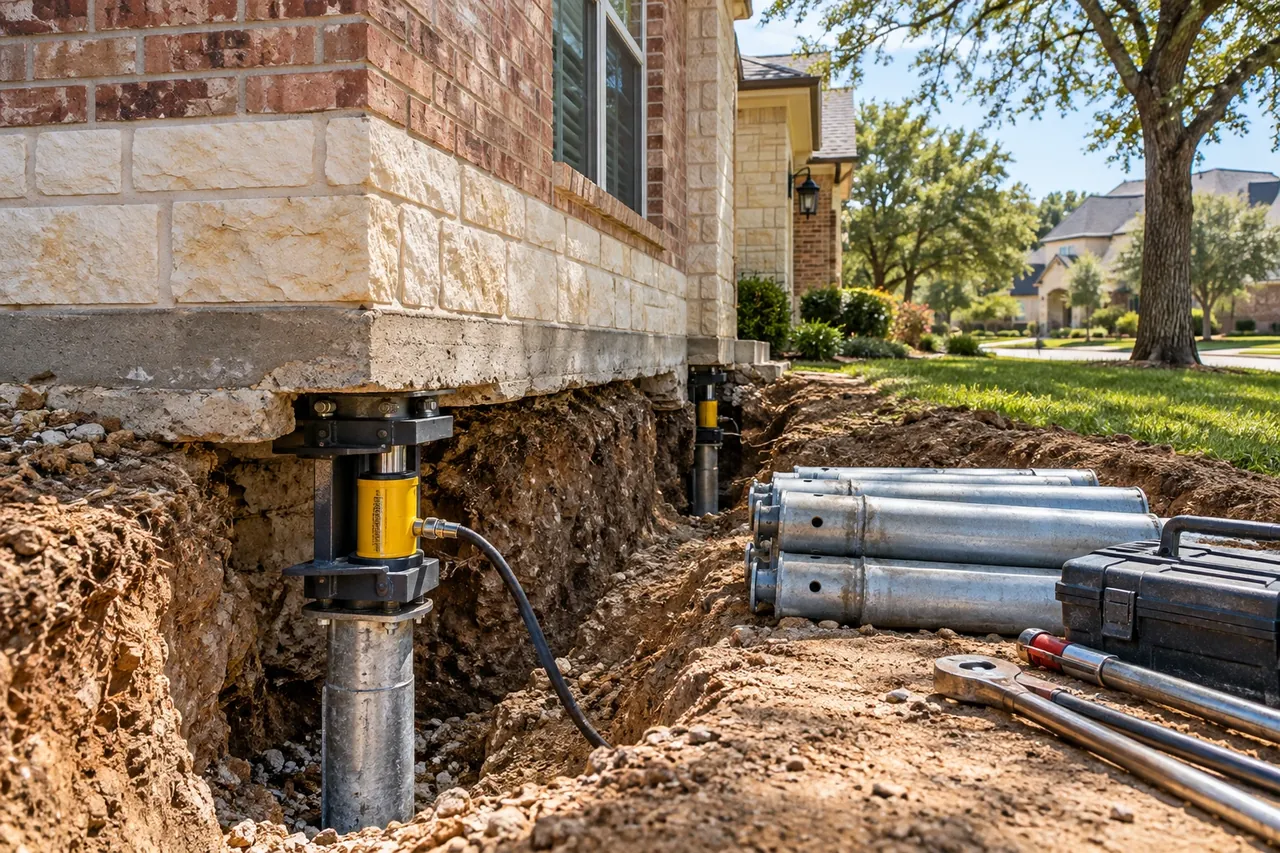
Foundation Piers in Round Rock, TX: Concrete and Steel
When the soil under part of your house can't be trusted, piers carry the load down past it. We install pressed concrete piers and steel push piers under Round Rock homes, with the type and spacing set by the engineer's sealed plan and the city permit handled for you.
- Free on-site foundation evaluations
- City permit and engineer paperwork handled
- Slab, pier & beam and drainage repair
- Free on-site evaluations
- City permit & engineer paperwork handled
- Pressed concrete & steel piers
- Cleanup & haul-away
What a Foundation Pier Does
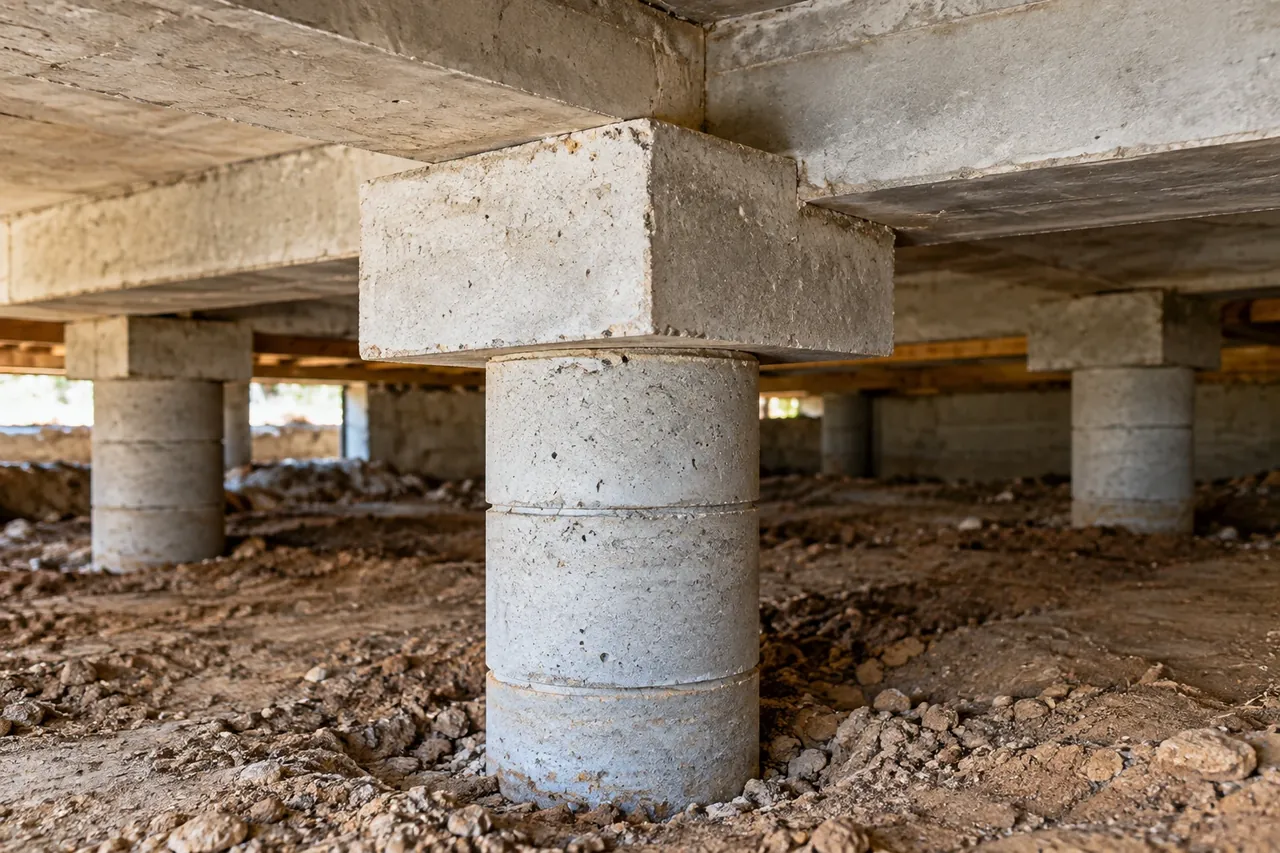
A pier is a column installed under the grade beam of your house that transfers the weight down to firmer ground. Once the piers are in, the house can be lifted off them and shimmed, and that section stops riding up and down with the clay near the surface.
- Piers stabilize settlement. They're the fix when an edge, a corner or a side of the house is dropping.
- They don't stop heave. A slab whose center is rising from swelling clay needs the water problem fixed, not more piers at the edge.
- Spacing follows the plan. The engineer sets pier locations around the load, the slab design and any post-tension cables.
Round Rock's ground varies block by block: deep clay over chalk and marl east of I-35, thinner soil and limestone to the west. Depth and type follow what's under your house. See why Round Rock clay moves.
Pier Types We Install
Each has a place in Central Texas ground.
Pressed Concrete Piers
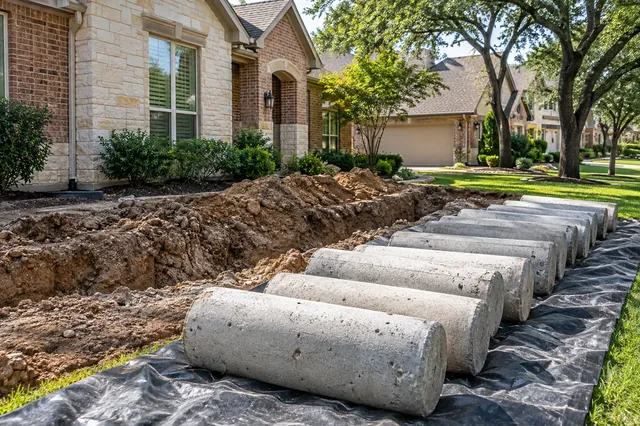
Precast cylinders pressed one on another with the house's weight as the reaction until they stop.
How they compare →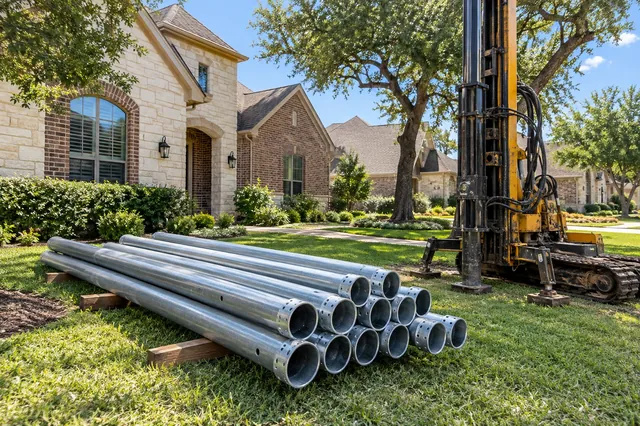
Steel Push Piers
Steel pipe sections driven hydraulically, often much deeper than concrete can go.
How they compare →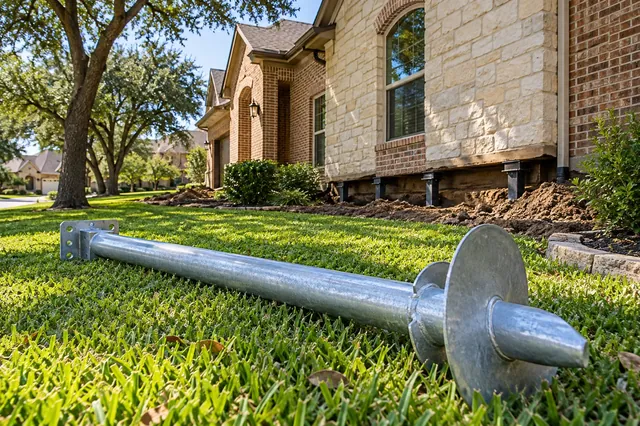
Drilled & Helical Piers
For special cases the engineer may call for drilled concrete or helical steel piers.
Ask about options →How Much Do Foundation Piers Cost in Round Rock?
Per-pier ranges from published cost guides and a Texas engineering firm's estimating sheet.
Published ranges from national cost guides and a Texas engineering firm. Your free on-site evaluation gives you a written price for your home. See the foundation repair cost guide.
Choosing Between Concrete and Steel Piers
This is the question most Round Rock homeowners ask, and the honest answer is that the soil and the engineer decide. Here's how we think about it:
Pressed concrete
Concrete cylinders are pressed into the ground with the weight of the house pushing back against the jack. They stop when the house can't push them any further. They cost the least per pier, and where firm layers sit within reach they perform well. Because they don't reach the depths steel does, their long-term performance depends more on soil moisture near the surface.
Steel push piers
Steel pipe can be driven much deeper, sometimes many tens of feet, to bearing that doesn't swing with the seasons. They cost more per pier. They make sense where clay or fill runs deep, on heavier two-story homes, and where a past concrete repair has failed.
Drilled and helical piers
Drilled concrete piers and helical steel piers are used less often in residential repair here, typically when the engineer needs a specific capacity or access is unusual. They cost more again.
Full comparison: pressed concrete vs. steel piers.
How We Install Piers
Every pier job follows the engineer's sealed plan.
Mark and locate
Pier locations are marked from the plan, and Texas811 marks utility lines before any digging.
Excavate
We dig access holes along the grade beam, setting soil on tarps and plants aside.
Install piers
Concrete cylinders are pressed or steel pipe is driven until the plan's criteria are met.
Lift and shim
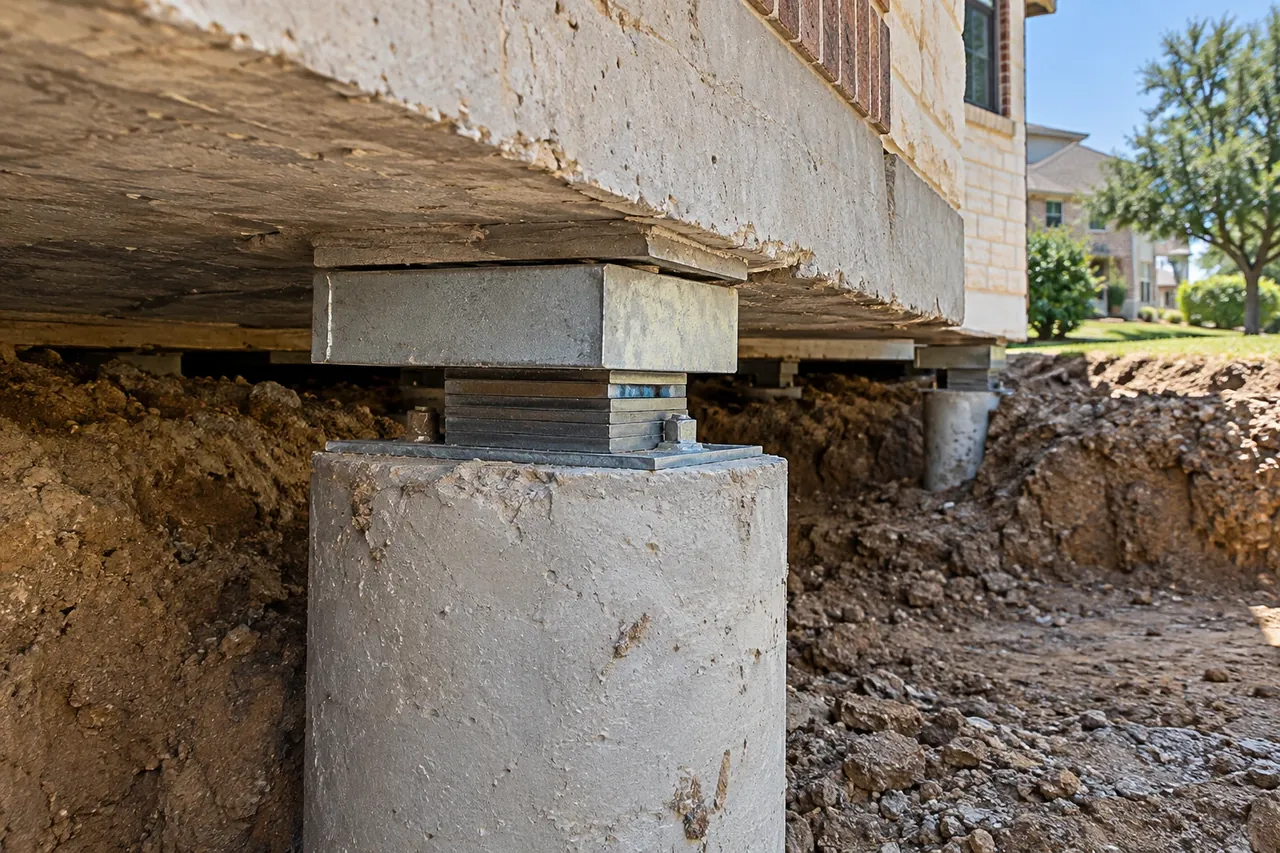
The house is raised in stages and set on steel shims and caps while we watch doors, windows and cracks.
Inspect and close up
The city inspects, plumbing is tested after the lift, holes are backfilled and the engineer's final report is filed.
Why Pier Depth and Records Matter
From the outside, every finished pier job looks the same: a flower bed and a level floor. What separates a good repair is underground and on paper.
- Depth and resistance. Concrete piers should be pressed until they truly refuse, not stopped early to save time. Steel piers are driven to the bearing the plan calls for.
- Pier log. A record of each pier's location and installation goes to the engineer for the final report.
- Engineering record. In Round Rock the sealed plan and final engineered report are required for the permit, and they're your proof of what was done when you sell. Texas doesn't license foundation repair contractors, so that independent record carries real weight.
- Drainage fixes. Piers hold up the repaired section, but the rest of the house still reacts to water. See drainage correction.
The Lift: Slow and Measured
Once the piers are in, the house is lifted with jacks set on the piers. We don't chase a number. We lift in stages, checking elevation readings and watching doors, windows, brick and drywall as the house comes up. The Texas ASCE guidelines are blunt that underpinning rarely produces a perfectly level foundation; our job is to get it as close as the house safely allows and then lock it there with steel shims.
After lifting, the plumbing should be tested for leaks, as the guidelines recommend, because a lift can stress old drain lines.
Frequently Asked Questions
Are concrete or steel piers better?
Neither is better everywhere. Pressed concrete costs less and works well where firm soil is within reach; steel goes deeper and suits deep clay, fill or heavier homes. The engineer's plan decides. See the comparison.
How deep do foundation piers go?
Pressed concrete piers go until the house's weight can't push them further. Steel push piers can be driven much deeper, sometimes many tens of feet. Depth varies a lot across Round Rock.
How much does a foundation pier cost?
Published ranges run about $350–$1,000 per pressed concrete pier and $550–$1,600 per steel pier, with helical and drilled piers higher. See the cost guide.
Can piers be installed inside the house?
Yes, when the engineer calls for interior support. We tunnel under the slab or cut a small opening in the floor, then patch it.
Will piers fix a heaving slab?
Usually not. Heave comes from swelling clay, often fed by a leak or poor drainage. Fixing the water source is the first step.
Do I need a permit for piers in Round Rock?
Yes. The city's foundation repair permit requires an engineer of record letter, a sealed plan and a final report. We handle it.
What happens to my landscaping?
We set plants aside where we can, keep soil on tarps, backfill and compact every hole, and haul away the extra.
Foundation Piers Across Round Rock
Get Your Free Foundation Pier Evaluation
Call now or request your free on-site foundation evaluation. No cost, no obligation.
- Free on-site evaluations
- City permit & engineer paperwork handled
- Pressed concrete & steel piers
- Cleanup & haul-away