
Pressed Concrete vs. Steel Piers for Round Rock Homes
The two pier systems used most under Central Texas homes, compared side by side so you can read a quote with confidence.
Pressed Concrete vs. Steel Push Piers
How the two most common pier systems compare for Round Rock slabs.
Swipe the table sideways to see every option →
| Feature | Pressed concrete | Steel push piers |
|---|---|---|
| How it's installed | Precast cylinders stacked and pressed with the house as the weight | Steel pipe sections driven hydraulically |
| Typical depth | Until the house can't push it further | Deeper, sometimes many tens of feet |
| Published cost | About $350–$1,000 per pier | About $550–$1,600 per pier |
| Best fit | Clay sites with firm layers within reach | Deep clay or fill, heavy homes, failed past repairs |
| Sensitivity to surface moisture | Higher, since they stay shallower | Lower, since they reach deeper bearing |
| Round Rock permit | Engineer's plan and final report required | Engineer's plan and final report required |
Prices are published ranges. The engineer of record chooses the system for your house.
The Short Answer
Pressed concrete piers are the most common, lowest-cost pier in Central Texas and work well where firm soil is within reach. Steel push piers cost more per pier but go deeper, which matters where clay or fill continues a long way down or the house is heavy. In Round Rock, the engineer's sealed plan makes the final call, and we install either.
How Pressed Concrete Piers Work
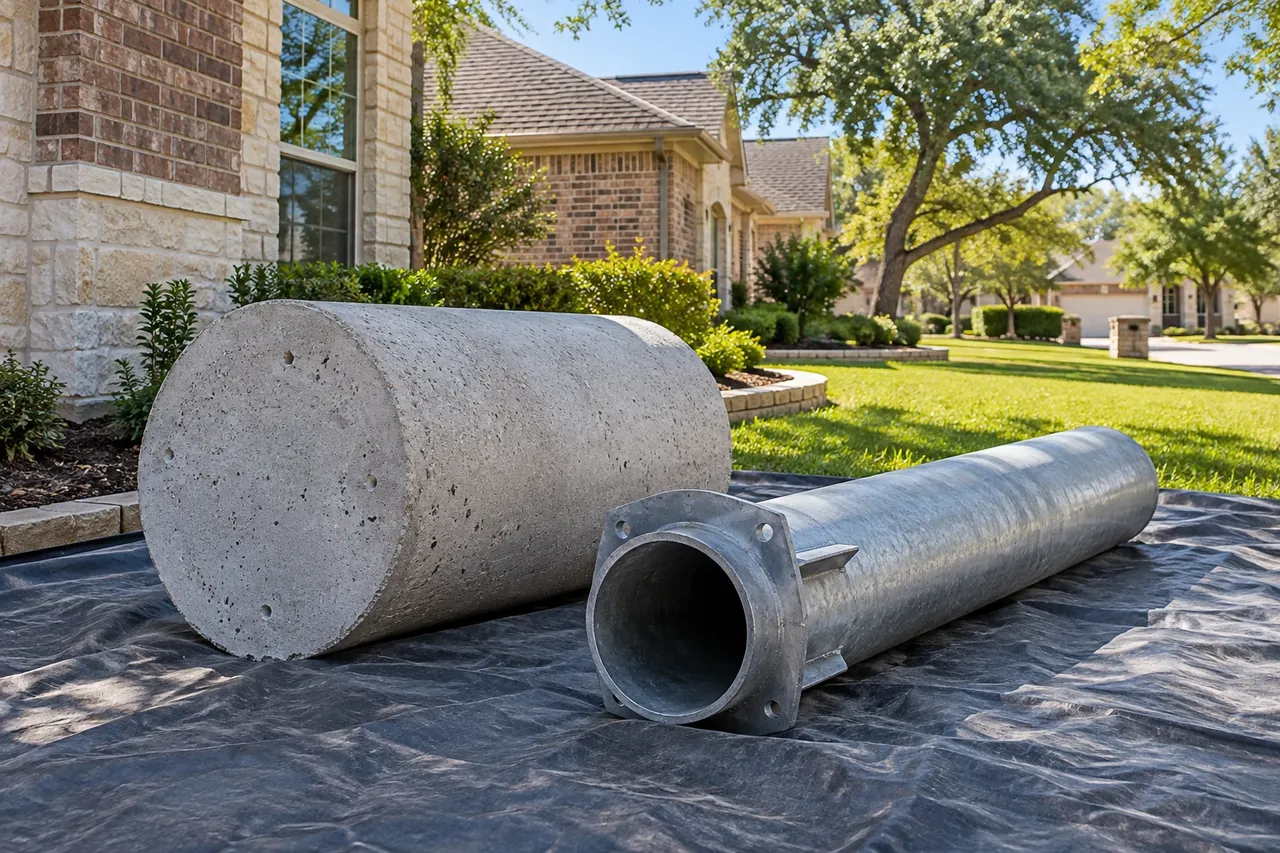
We dig beside the grade beam and press a precast concrete cylinder into the ground with a hydraulic jack, using the weight of the house as the reaction. Another cylinder is stacked on top and pressed, and so on, until the soil stops it and the house would lift instead. A cap and steel shims go on top. Because the installer can only push as hard as the house weighs, concrete piers usually stop at shallower depths than steel.
How Steel Push Piers Work
Steel piers are pipe sections driven hydraulically through a bracket on the foundation. One Texas pier company notes they can reach depths up to 75 feet in some soils. The extra depth puts the bearing below the zone where clay moisture swings with the seasons, which is the main reason to pay more for them.
Which Fits Your Round Rock Home?
- East-side slab on prairie clay, one-story, settling at a corner: pressed concrete is often the practical choice.
- Two-story home, deep fill or very deep clay: steel deserves a serious look.
- A past concrete pier repair that's moving again: steel is commonly recommended.
- West-side home near shallow limestone: either may stop at rock quickly, and the engineer may favor whichever reaches bearing reliably.
What Matters More Than the Material
- Pressing or driving to real refusal, not stopping early.
- Spacing and locations from the engineer's sealed plan.
- A careful lift and a plumbing test afterward, per the Texas ASCE guidelines.
- Drainage fixes so the rest of the house stays stable.
- A final engineered report, which Round Rock requires before final inspection.
See typical totals in our foundation repair cost guide, or call (737) 259-6724 for a free evaluation.
Frequently Asked Questions
Are steel piers better than concrete piers?
Not always. Steel goes deeper and suits deep clay or fill, but pressed concrete costs less and performs well where firm soil is within reach.
How much more do steel piers cost?
Published ranges run about $550–$1,600 per steel pier versus about $350–$1,000 per pressed concrete pier.
Who decides which pier I get?
In Round Rock, the engineer of record's sealed plan sets the pier type and locations for the permit.
Can concrete and steel be combined?
Yes. Some systems drive steel to depth and finish with concrete on top, and some repairs mix pier types under different parts of the house.
Do both need a permit in Round Rock?
Yes. Either pier system falls under the city's foundation repair permit.
Not Sure Which Pier You Need? Ask Us
Call now or request your free on-site foundation evaluation. No cost, no obligation.
- Free on-site evaluations
- City permit & engineer paperwork handled
- Pressed concrete & steel piers
- Cleanup & haul-away